
 By
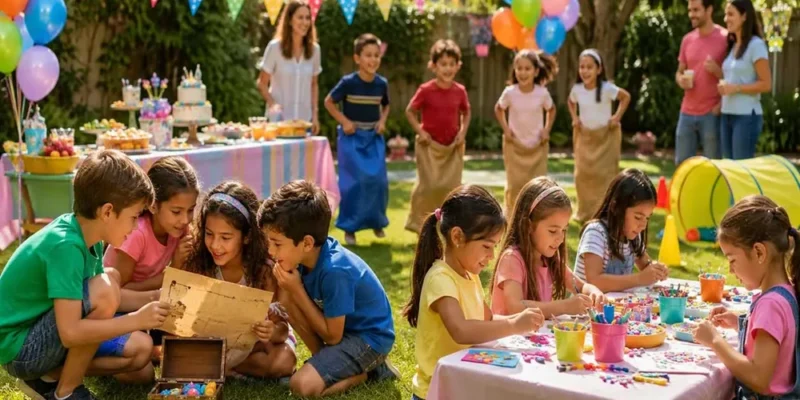
Twenty-two kids RSVP’d yes. Nine showed up, and four of them arrived forty minutes late. I learned more from that party than from any checklist I’d ever read.
The mess wasn’t the kids. It was the plan. I’d built the whole afternoon around a headcount that was never real, stacked activities back to back with no slack, and picked a venue before I understood what the room actually gave me. If you’re staring down a birthday and feeling the same low panic, here’s the short version: your party holds together when the venue, the guest list, and the schedule all agree with each other. Most parties break because those three things get decided separately. The best decision I made that year was booking a birthday party at Miami Children’s Museum, where the room, the host, and the hours were already settled before I started building the rest around them. That single move took a dozen small decisions off my plate, and you can borrow the same logic even if you’re hosting in your backyard.
Start with the venue, not the Pinterest board
I know how satisfying it is to pick a theme first. Don’t. The room decides more than you think: how many kids fit without chaos, whether there’s a private space for cake, who handles setup and cleanup, and how long you actually get the space. A party plan that ignores those constraints will fight you all afternoon.
Here’s the question that cuts through the noise: what does the venue hand you versus what do you haul in yourself?
Some venues give you a decorated room, tables, a host who runs the flow, and the cleanup. Others give you four walls and a folding table. Neither is wrong, but your supply list and your mental load look nothing alike. When you tour a space, ask about setup time, whether outside food is allowed, where gifts go, and who sweeps up afterward. Write the answers down. You will forget them by Tuesday.
And check the boring details early. Is parking realistic on a Saturday? Is there a drop-off lane for parents in a hurry? Small friction at arrival sets the mood for the entire party, so give it ten minutes of thought before you book anything.
Build a guest list you can actually feed
Kids’ parties attract siblings, grandparents, and the friend who forgot to RSVP. Assume the number on your list is a starting point, not a ceiling. I’d rather invite slightly fewer kids and have room for surprise guests than squeeze twenty into a space built for twelve.
For younger kids, a good working rule is one guest per year of age plus one or two, though you should scale that up if parents stay. And be honest about whether you want a drop-off party or a family event. Those are different parties with different food, seating, and supervision needs. If you’re inviting a wide age range, plan at least one activity that works for the littlest guest and one that keeps the older kids from getting bored.
Send invitations three to four weeks out with a clear RSVP deadline and the party end time in bold. Parents plan around an end time. Give them one.
The two-hour structure that keeps everyone moving
Two hours is the sweet spot. Long enough for real play, short enough that nobody melts down. My tested framework is the Four Blocks, and it’s the thing I’d hand anyone planning their first kid party:
- Arrival and free play (first 30 minutes). Kids trickle in at wildly different times. Don’t schedule anything structured while guests are still arriving, or early kids get bored and late kids interrupt.
- Food and cake (next 30 to 40 minutes). Feed them before the big activity, not after. Hungry kids are terrible at games, and sugared-up kids are terrible at listening.
- The main event (40 to 50 minutes). This is your one big thing: a performer, a museum exhibit run, a craft, a scavenger hunt. Pick one. One.
- Wind-down and pickup (last 15 minutes). Quiet activity, coats on, favors handed out at the door so nothing gets lost in the shuffle.
I’ll say the unpopular part out loud: skip several of the games you saw online. A party with three activities nobody finishes feels chaotic, and a party with one activity everyone loves feels generous. Choose generous.
Where the party and the parents actually land
One thing nobody warns you about: parents need a place to stand. If your venue has a lobby or seating near the party room, adults can chat and keep an eye on things without hovering at the edge of the cake table. Ask about that when you book, especially if a good number of families are staying rather than dropping off.
Museums tend to work well here because the play space itself keeps kids engaged, so parents aren’t hunting for ways to entertain them in a restaurant booth. It’s a pattern you see in the way cultural institutions design for families; the Museum of Modern Art and countless others build entire family programs around letting kids move while adults linger nearby. That dynamic is gold on party day because it buys you time and calm in the same room.
Party-day logistics worth sweating
Most of the bad surprises on party day are unglamorous. Cake cutting tools, a trash plan, a phone charger, and a clearly marked gift table fix half of them.
Here’s a short list I now run every time:
- Confirm the start and end time with the venue 48 hours out.
- Pack a small kit: candles, lighter, napkins, scissors, tape, and a backup set of matches.
- Assign one adult to photos and one to the gift table.
- Label favors so you can hand them out by name.
- Have a quiet corner ready for any kid who needs a break.
The backup adult matters more than you’d guess. According to the Centers for Disease Control and Prevention, roughly one in three young kids has a food allergy, which is exactly why you keep ingredient labels handy and let parents serve their own kids when there’s doubt. That’s not paranoia. That’s a five-minute habit that saves you a stressful conversation.
Use the outdoor option when you can get it
If your venue sits near a park or open space, a short walk outside can reset the energy of the whole party. Kids get loud and overstimulated indoors, and a few minutes of open air between the food and the cake is an easy save. Keep an eye on the weather and a backup plan for rain, but don’t skip the outdoor window if the space allows it. Public spaces are built for exactly this kind of loose, unstructured play; the National Park Service consistently points to time outdoors as one of the simplest ways families break up a long day, and you don’t need a grand plan to borrow that idea.
What you don’t need to do
You don’t need matching tableware, a themed backdrop, or a party favor bag that costs more than the cake. You don’t need three activities. You don’t need to invite every classmate if the guest list is overwhelming.
What you need is a room that fits the crowd, a schedule with breathing room, and one big thing kids will talk about on the car ride home. The theme can be as simple as the thing your child is obsessed with this month. That’s usually the version they remember anyway.
So when the guest list wobbles and the schedule slips, come back to the three things that matter: venue, people, plan. Pick a space that gives you most of it, invite a crowd you can feed, and build two hours that leave room for the surprises. If you’re in South Florida and want the room, the hours, and the play figured out for you, start by checking the museum’s party options and tour the space before you commit. Your future self, the one doing this on a Saturday morning with a box of candles, will thank you.








Comments